


Old Dominion University’s Office of Enterprise Research and Innovation (OERI) Announces the Appointment of B. Danette Allen, Ph.D. to Executive Director of the Virginia Modeling, Analysis, & Simulation Center (VMASC)
June 26, 2025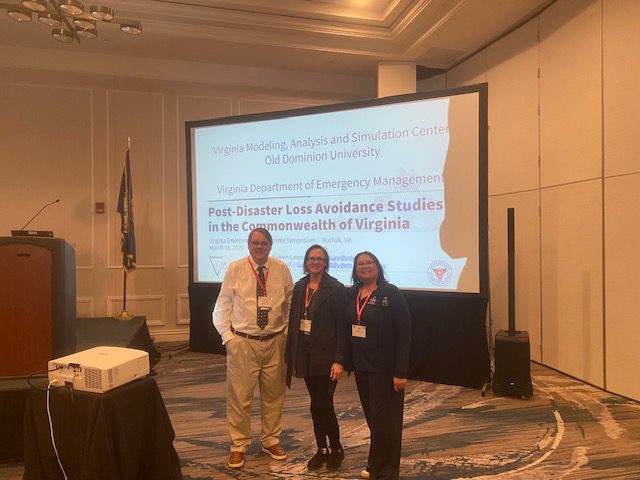
VMASC at VEMS 2026: Turning Hazard Data into Action
From March 16–19, emergency management professionals from across Virginia gathered in Norfolk for the 2026 Virginia Emergency Management Symposium (VEMS), co-hosted by the Virginia Emergency Management Association (VEMA) and the Virginia Department of Emergency Management (VDEM). VMASC researchers delivered two sessions that translated modeling, data, and field engagement into actionable strategies for communities facing flooding, tornadoes, and severe wind events.
Quantifying the Impact of Mitigation: Post-Disaster Loss Avoidance in Virginia
The Commonwealth has experienced 76 federal disaster declarations since 1953, reflecting exposure to hurricanes, floods, winter storms, and other natural hazards. In response, Virginia has invested nearly $500 million in Hazard Mitigation Assistance (HMA) funding since 1990, supporting more than 700 projects and reducing risk for more than 1,800 properties statewide.
In the session “Post-Disaster Loss Avoidance Studies in the Commonwealth of Virginia,” a team led by Kaleen Lawsure from VMASC, in collaboration with Kevin O’Brien from the Virginia Institute for Spaceflight and Autonomy (VISA), walked through how these mitigation investments are being systematically evaluated. The team used post-disaster loss avoidance studies to estimate the real-world damages that were prevented by completed projects—such as acquisitions and elevations in flood-prone neighborhoods, and critical facility physical protective measure—while supporting updates to the Commonwealth of Virginia Hazard Mitigation Plan.
Grounded in Virginia’s diverse flood risk profile, the presentation highlighted:
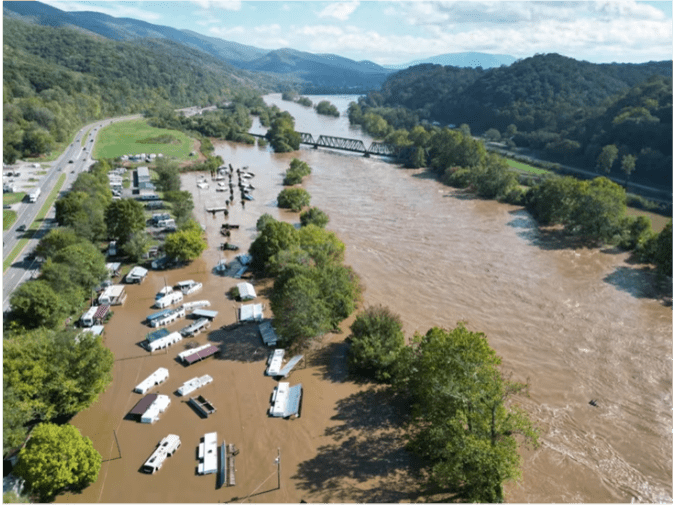
• Virginia’s hazard history and flood exposure, from coastal and tidal flooding in low-lying urban corridors to riverine and flash flooding in the mountainous western region.
• Mitigation measures implemented across the state with HMA support, and how they align with local and state resilience priorities.
• Post-mitigation loss avoidance results, including success stories where projects demonstrably reduced damages during recent events, as well as recurring challenges in data, documentation, and communicating benefits to decision-makers.
By pairing modeling and observed impacts, this work strengthened the case for continued mitigation funding and provided a template for localities seeking to document the value of their own projects.
From Missouri to Virginia: Advancing Tornado and Straight-Line Wind Resilience
Although tornado risk is often associated with the central United States, Virginia experiences an average of 18 tornadoes per year, with distinct clustering patterns shaped by the Blue Ridge Mountains, the Fall Line, and local meteorological dynamics. Yet, tornado resilience in the Commonwealth—especially related to societal and infrastructure needs—has remained comparatively underexplored.
The VEMS session “Journey from Butler County MO to Isle of Wight County VA: Takeaways from the 2025 Virginia Tornado & Straight-line Wind Summit” traced a collaborative effort that began with the Commonwealth’s Hazard Mitigation Working Group, traveled to Missouri to learn from recent severe wind events, and culminated in the 2025 Virginia Tornado and Straight-Line Wind Summit. This work was carried out by a multidisciplinary team that included Dr. Joshua Behr and Kaleen Lawsure from VMASC, Wei Yusuf from the ODU College of Business and Public Service, Monica Arul from Virginia Tech, and Leigh Chapman from Salter’s Creek Consulting.
The team shared:
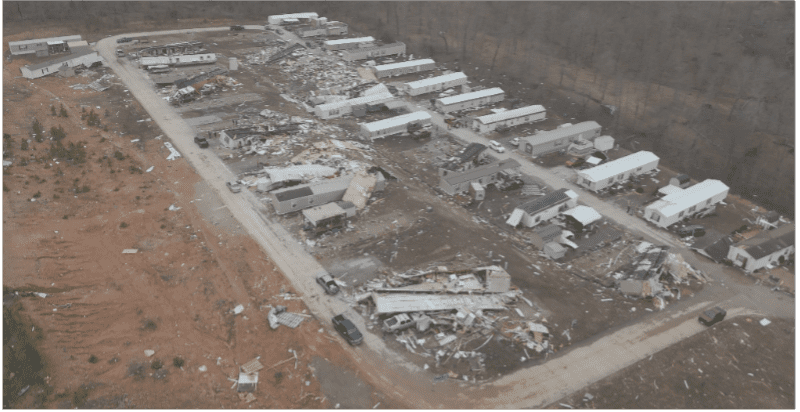
• Key insights from site visits and engagement in Butler County, Missouri, focused on long-track tornadoes and straight-line wind impacts on housing, infrastructure, and critical services.
• Patterns of tornado activity in Virginia, including clustering in the lee of the Blue Ridge Mountains and along the Fall Line, and the atmospheric mechanisms that support elevated tornado activity in these corridors.
• Mitigation and preparedness priorities identified by Summit participants—ranging from building performance and safe room needs to warning dissemination, public education, and recovery planning for rural and small-town communities.
This work positioned Virginia’s tornado and severe wind challenges within a broader national context, while emphasizing locally relevant solutions informed by both science and community experience.
Strengthening the Commonwealth’s Resilience Ecosystem
Together, these two VEMS presentations underscored VMASC’s role as a trusted partner to VDEM, local emergency managers, and other practitioners working to reduce disaster risk across Virginia. By combining modeling, simulation, field research, and stakeholder engagement, VMASC helped the Commonwealth not only understand where and why losses occur, but also how specific mitigation actions can measurably change outcomes.
For ODU and OERI, VMASC’s presence at VEMS 2026 reinforced the value of applied research that directly supports policy, planning, and investment decisions at the state and local level. The lessons from post-disaster loss avoidance studies and the Tornado & Straight-line Wind Summit are expected to inform future projects, proposals, and collaborations aimed at making Virginia’s communities safer, more resilient, and better prepared for the hazards ahead.